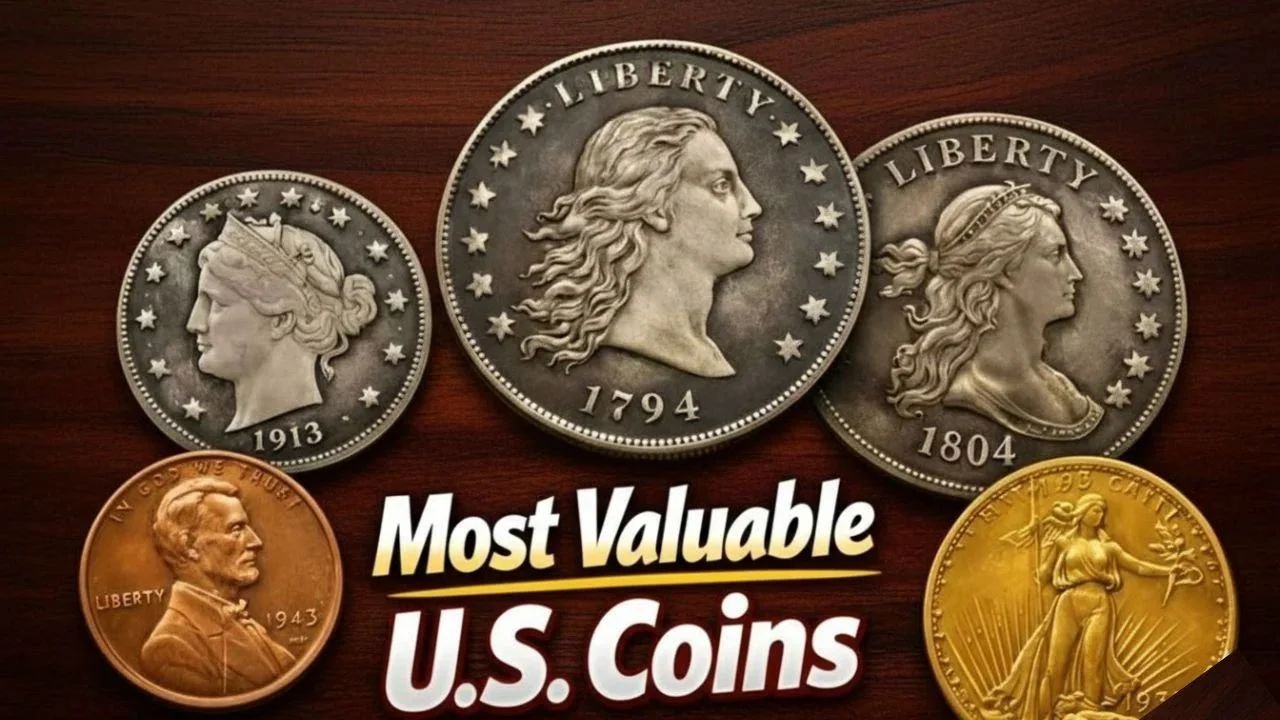
In high-level numismatics, perfection is not always the ultimate prize. Some of the most valuable coins in the world were created when precision machinery shifted, pressure misfired, or metal flowed unpredictably. These rare minting anomalies—often described as “UFO-like” for their unusual shapes and surreal appearance—have evolved from factory accidents into highly sought-after collector assets.
For sophisticated hobbyists and alternative asset investors, mint errors represent more than curiosities. They are physical records of industrial history, scarcity, and market psychology converging in metal.
When Precision Manufacturing Produces the Unexpected

Modern facilities such as the United States Mint and the Royal Mint operate with extraordinary efficiency, striking millions of coins daily. Despite advanced automation and strict quality control, large-scale production inevitably allows occasional anomalies to escape detection.
These deviations are not post-circulation damage. True mint errors originate during the manufacturing process itself. That distinction is critical. Authentic errors display characteristics that reflect mechanical forces rather than environmental wear or human alteration.
Each error captures a precise industrial moment—a split second where alignment, pressure, or material flow diverged from intended design.
Off-Center Strikes: Misalignment in Motion
One of the most recognizable mint errors occurs when a blank planchet is improperly positioned between the dies. When the strike occurs, part of the design is impressed while the remainder of the blank remains untouched.
The result is an off-center coin, often featuring a crescent-shaped blank area along the rim.
Why Collectors Value It
The degree of misalignment largely determines value. Minor shifts may carry modest premiums, but coins showing 40% to 60% off-center strikes—while still retaining a visible date—are especially desirable.
The combination of dramatic appearance and identifiable origin enhances collectibility. These coins are instantly noticeable, even to casual observers.
Broadstrikes: When the Collar Fails
During normal production, a retaining collar surrounds the coin as it is struck, shaping the edge and containing metal expansion. When the collar fails to engage, the metal spreads outward unrestricted.
This produces a “broadstrike”—a coin that appears wider, thinner, and sometimes slightly distorted at the edges.
Well-preserved broadstrikes that maintain full design clarity can command significant premiums. Their sculptural quality and unusual dimensions create strong visual appeal, particularly when symmetry is preserved despite the error.
Multiple Strikes: Layered Design Chaos
Some of the most captivating mint errors occur when a coin receives more than one strike.
If a coin fails to eject from the striking chamber and is struck again—sometimes rotated or misaligned between strikes—the resulting imagery can appear abstract or chaotic. Overlapping portraits, doubled inscriptions, and shifted design elements transform standard coinage into something visually dramatic.
While technically distinct from multiple strikes, doubled die varieties—such as certain rare issues of the Lincoln cent—illustrate how minor production deviations can create substantial market premiums. In elite condition, these coins have achieved remarkable auction results.
Clipped Planchets: Imperfect Blanks, High Appeal
Before striking, coin blanks are cut from large sheets of rolled metal. If the cutting mechanism overlaps or misfeeds, the resulting blank may feature a curved segment missing.
When struck, this produces a clipped planchet error.
The size and location of the clip influence desirability. Larger, more dramatic clips typically generate stronger interest. Authentic clipped planchets also display a subtle weakness opposite the missing section—an identifying characteristic that distinguishes genuine mint errors from post-mint damage.
Collectors appreciate clipped coins for their geometric irregularity and clear evidence of the manufacturing process.
Die Cap Errors: Sculpted by Repetition
Among the most visually unusual mint errors are die caps.
This occurs when a struck coin adheres to one of the dies. Subsequent blanks are struck against the stuck coin, gradually shaping it into a cupped or cap-like form. With each additional strike, the coin becomes more distorted.
Over time, the piece can resemble a shallow metallic container, with stretched design elements and thinned metal walls.
Die cap errors are scarce and often command substantial premiums due to their sculptural form and unmistakable appearance.
Rotational Errors: When Alignment Breaks Convention
In standard coinage alignment, flipping a coin vertically reveals the reverse image upright. When a die becomes loose, one side may rotate beyond acceptable tolerance.
Minor rotational shifts are relatively common. However, rotations exceeding 45 degrees—or reaching 90 degrees or more—significantly increase collector interest.
Authentication is essential. Improper handling can simulate rotation, but genuine errors remain fixed at a consistent misaligned angle.
Wrong Planchet Errors: Metal Mismatches
One of the rarest and most dramatic mint mistakes occurs when a blank intended for one denomination is struck with dies from another.
This creates a coin with unexpected weight, composition, or dimensions. For example, a smaller denomination struck on a larger planchet may exhibit incomplete design coverage, while heavier planchets produce unusually weighty coins.
Because modern mints segregate blanks by size and alloy, these cross-denomination errors are uncommon. Verified examples often attract strong investor demand due to their clear deviation from standard production.
Transitional Errors: History Captured in Metal
When mints shift between design changes or metal compositions, brief overlap periods can yield hybrid coins.
These transitional errors are particularly appealing because they document defined historical shifts. Whether it is a change in alloy content or a design update, transitional pieces carry both rarity and narrative value.
Investors appreciate assets that represent precise moments of policy or production evolution.
Identifying Genuine Mint Errors
Not every unusual coin is valuable. Post-mint damage, environmental corrosion, and deliberate alteration can mimic authentic errors.
To evaluate a potential mint anomaly:
Compare it with a standard coin of the same issue
Check the weight against official specifications
Examine edges and strike details under magnification
Avoid cleaning or modifying the surface
Professional certification is strongly recommended for high-value specimens. Third-party grading provides market credibility and often influences realized auction prices.
Market Demand and Investment Potential
Mint errors occupy a distinctive niche within alternative collectibles. Their appeal rests on several factors:
Natural scarcity
Visual distinctiveness
Mechanical authenticity
Cross-collector demand
Unlike bullion coins whose value fluctuates with metal markets, error coins derive worth primarily from rarity and collector competition.
Exceptional specimens have achieved thousands—and in rare cases, tens of thousands—at auction. However, not all errors appreciate equally. Severity, eye appeal, condition, and historical context determine long-term performance.
Modern Coins and Future Discoveries
Advanced automation has significantly reduced dramatic production errors. Yet no system operating at massive scale is entirely flawless.
Even contemporary issues occasionally yield surprising anomalies. Dedicated collectors continue examining circulation coins, mint sets, and bank rolls in search of overlooked irregularities.
Discovery remains part of the allure.
Preserving Value Through Proper Storage
If you encounter a potential mint error:
Handle it only by the edges
Store it in non-PVC holders or protective slabs
Maintain stable humidity and moderate temperature
Retain documentation of acquisition and certification
Never clean or polish an error coin. Surface alteration permanently reduces value and erases original mint characteristics.
The Enduring Allure of Imperfection
In a world defined by technological precision, mint errors remind us that value often emerges from unpredictability. They are physical evidence of fleeting mechanical moments that slipped past industrial controls.
For discerning collectors and investors, these “UFO-like” coins offer more than novelty. They combine scarcity, history, and visual intrigue into compact, tangible assets.
They are not simply currency.
They are artifacts of chance—where precision met unpredictability, and rarity was born.