
Few coins command the historical prestige and market power of the Lincoln Wheat cent. Introduced in 1909 to honor the 100th anniversary of Abraham Lincoln’s birth, it marked a defining moment in American coinage. For the first time, a real historical figure appeared on a regularly circulating U.S. coin.
Designed by Victor David Brenner and produced by the United States Mint from 1909 through 1958, the Wheat penny was once everyday pocket change. Today, select examples rank among the most valuable small coins ever struck in America. In 2026, elite specimens continue to achieve six- and seven-figure auction results.

While the majority remain modestly priced, a rare few have achieved legendary status. Understanding why is the first step toward identifying true value.
What Drives Million-Dollar Valuations?
Age alone does not create rarity. Three core factors determine whether a Wheat penny is worth a few cents — or several million dollars.
Rarity and Survival Rate
Some dates were produced in limited numbers. Others had reasonable mintages but few examples survived in high grade. Coins that were heavily circulated, melted, or lost over time naturally became scarcer in premium condition.
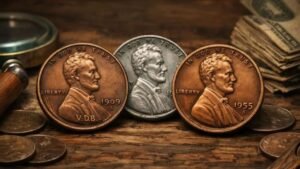
True rarity is measured not only by original mintage but by how many certified examples remain today.
Mint Errors
Production mistakes can transform ordinary coins into historic treasures. Transitional metal errors, doubled dies, and missing mint marks are among the most desirable varieties in the Wheat cent series.
Because error coins were unintentional, quantities are often extremely small.
Condition and Copper Color
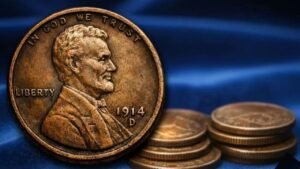
Copper coins are uniquely sensitive to time and environment. In professional grading, color matters as much as surface preservation.
Red (RD) coins retain at least 95% of their original mint luster and command substantial premiums. Red-Brown (RB) examples show partial toning. Brown (BN) coins are fully toned and typically less valuable in high-end markets.
Certification by respected grading firms adds essential credibility and liquidity to high-value pieces.
The 1943 Bronze Penny: A Wartime Icon
During World War II, copper was redirected for military use. In 1943, the Mint struck cents on zinc-coated steel planchets. However, a few leftover copper blanks from 1942 were mistakenly used.
The result was the legendary 1943 Bronze Lincoln cent — one of the most celebrated mint errors in American history.
Fewer than 20 authenticated examples are believed to exist across all mints. High-grade specimens have surpassed $1.7 million at auction.
A genuine 1943 bronze cent:
- Does not stick to a magnet
- Weighs approximately 3.11 grams
- Matches verified die characteristics
Because altered counterfeits are common, professional authentication is mandatory before any valuation discussion.
The 1944 Steel Penny: The Reverse Mistake
In 1944, copper planchets returned to normal production. Yet a small number of steel blanks from 1943 remained in the presses and were struck with 1944 dies.
These rare 1944 steel cents appear silver-gray rather than copper in color.
Authenticated examples have sold between $125,000 and $400,000 depending on grade. Their rarity and clear visual distinction make them a centerpiece in advanced collections.
1909-S VDB: The First-Year Key Date
The 1909-S VDB is widely considered the cornerstone of the series.
When Brenner’s initials “VDB” appeared prominently on the reverse, public criticism led to their removal. Before production ceased, the San Francisco Mint struck only 484,000 examples — a tiny mintage by historical standards.
Circulated coins often trade between $700 and $1,500. High-grade Red specimens have exceeded $170,000 at auction.
For serious collectors, this coin represents both artistic heritage and early 20th-century controversy.
1914-D: Scarcity in High Grade
The 1914-D Wheat penny had a modest mintage and experienced heavy circulation. As a result, well-preserved examples are scarce.
Circulated coins typically range from $150 to $400. Exceptional Mint State Red examples have crossed the $150,000 mark.
Because altered mint marks exist, third-party grading is strongly recommended for any higher-grade specimen.
1922 “No D” Variety
In 1922, only the Denver Mint produced pennies. Due to heavily worn dies, some coins show a weak or missing “D” mint mark.
Collectors seek strong “No D” examples with clear reverse details. Prices range from approximately $500 in circulated condition to more than $50,000 for high-grade certified coins.
This variety demonstrates how die wear — not just mintage — can create long-term value.
1955 Doubled Die Obverse
Among the most dramatic error coins ever released, the 1955 Doubled Die Obverse displays bold doubling on the date and inscriptions. The error is visible without magnification, making it instantly recognizable.
Thousands entered circulation before detection, and many were saved once the variety gained attention.
Circulated examples often sell between $1,000 and $1,800. High-grade Red examples have topped $120,000.
Its visual appeal and historical notoriety keep demand strong in 2026.
1958 Doubled Die: A Modern Rarity
The 1958 Doubled Die is far rarer than its 1955 counterpart. Only a few dozen confirmed examples are believed to exist.
High-grade specimens have sold for more than $30,000, and values continue to strengthen as registry collectors compete for top-population pieces.
How to Evaluate Your Wheat Pennies
If you discover Wheat cents in an inherited collection or old coin jar, follow a structured approach:
- Check the date and mint mark beneath the year.
- Use a magnet to test 1943 and 1944 coins.
- Weigh suspicious pieces precisely.
- Examine 1955 and 1958 cents for visible doubling.
- Never clean a coin under any circumstances.
Cleaning permanently damages surfaces and eliminates collector premiums.
If a coin appears unusual, professional grading is the safest next step.
Market Outlook for 2026
The Wheat penny market remains resilient in 2026. Strong demand exists for:
- Certified key dates
- High-grade Red examples
- Transitional metal errors
- Registry-quality coins
Digital auction platforms and global participation have increased transparency and competition. While common circulated Wheat cents often sell for only a few cents each, elite examples continue attracting sophisticated bidders and long-term investors.
Are Wheat Pennies a Smart Investment?
Rare coins should first be acquired for knowledge, appreciation, and historical interest. That said, authenticated key-date Wheat pennies have demonstrated strong long-term performance compared to many collectible categories.
Investors must consider grading fees, transaction costs, and market cycles. Selectivity and professional guidance remain essential.
Final Perspective
The Lincoln Wheat cent is more than currency.
It represents wartime innovation.
It captures early American design heritage.
It rewards careful study and patience.
Most Wheat pennies remain accessible to everyday collectors. But a small group — defined by rarity, condition, and authenticity — continues to achieve extraordinary valuations in 2026.
In numismatics, sometimes the smallest coin carries the largest story.