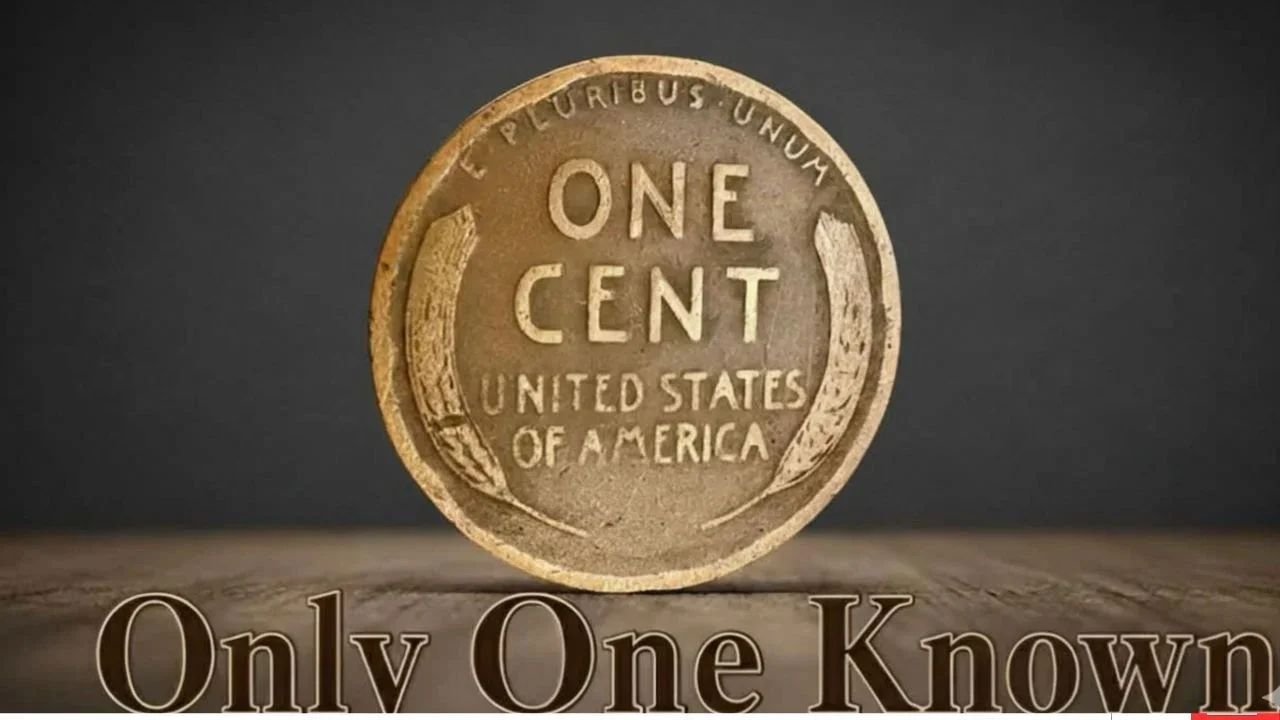
The notion of a single penny commanding $867,000 may sound improbable at first glance. Yet within the refined world of high-end numismatics, such valuations are grounded in measurable rarity, elite preservation, and verified market demand.
The Lincoln Wheat cent remains one of the most widely collected coins in American history. While the vast majority trade for modest sums, a select tier of exceptional examples has achieved six- and even seven-figure auction results. Understanding why requires a closer look at history, condition, and scarcity.
A Transformational Moment in U.S. Coinage

When the Lincoln cent debuted in 1909, it represented a historic shift in American currency design. For the first time, a real historical figure—Abraham Lincoln—appeared on a regularly circulating U.S. coin.
The coin was designed by sculptor Victor David Brenner and struck by the United States Mint. Its obverse portrait of Lincoln remains foundational to modern cent designs. The reverse featured two stylized wheat stalks framing the denomination, symbolizing growth and national resilience.
Minted from 1909 through 1958, the Wheat Penny spanned two world wars, the Great Depression, and the early years of American global leadership. Its longevity alone contributes to its cultural and collectible depth.
Can a Wheat Penny Truly Be Worth $867,000?
Yes—but only under extraordinary conditions.
An $867,000 valuation typically applies to a top-population rarity certified at an elite mint state grade. These are coins that exhibit near-perfect preservation, vibrant original luster, and exceptional strike quality. They are authenticated, encapsulated, and traded through major auction platforms where competitive bidding determines final price.
Such values are generally associated with:
Ultra-high-grade key dates
Rare transitional metal errors
Extremely low surviving populations
Strong provenance and auction history
For context, most Wheat Pennies remain affordable, often worth between a few cents and several dollars. The dramatic increase in value emerges when rarity intersects with impeccable condition.
Key Wheat Pennies That Command Elite Prices
Certain dates and varieties consistently drive six-figure results in top grades.
1909-S VDB
The 1909-S VDB is a foundational key date. The San Francisco Mint produced only 484,000 examples bearing Brenner’s initials “VDB” on the reverse before public criticism led to their removal.
While circulated examples trade at premium levels, pristine Red specimens graded at the highest levels can approach or exceed six figures.
1914-D
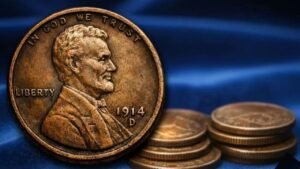
The 1914-D cent had a relatively modest mintage and saw heavy circulation. As a result, sharply preserved examples are scarce.
In elite mint state grades—particularly those retaining full original red color—auction prices can rise dramatically.
1922 “No D”
In 1922, cents were produced exclusively at the Denver Mint. Due to worn dies, some coins were struck without a visible “D” mint mark. These genuine error coins are highly sought after.
Well-preserved examples with strong detail can command substantial premiums.
1943 Bronze (Copper)
During World War II, pennies were struck in zinc-coated steel to conserve copper for military use. A small number of leftover bronze planchets were mistakenly struck in 1943, creating one of the most famous mint errors in American history.
High-grade authenticated examples have surpassed $1 million at auction. A top-condition specimen could align with the kind of valuation associated with an $867,000 sale.
1955 Doubled Die Obverse
The 1955 Doubled Die features dramatic, visible doubling in the date and inscriptions. Unlike subtle varieties, this error is easily recognizable without magnification.
High-grade Red examples continue to attract strong demand from advanced collectors.
Why Condition Drives Exponential Value
At the upper tier of the coin market, condition is everything.
Coins are graded on a 70-point scale. The difference between MS-63 and MS-65 may appear minor to the untrained eye, yet it can represent a dramatic financial gap.
Copper coins are particularly sensitive to environmental exposure. Over time, they oxidize and tone. Red (RD) examples retaining at least 95% of their original mint luster are significantly rarer than Brown (BN) coins.
Elite collectors often compete for top-population examples—those graded at the highest known level for a specific date. When population reports confirm only a handful exist, prices escalate accordingly.
Professional certification provides authentication, standardized grading, and investor confidence—essential components for achieving record-level valuations.
How to Evaluate a Wheat Penny
If you encounter a Wheat Penny in a collection or inheritance, follow a systematic evaluation:
Check the date and mint mark beneath the year.
Examine overall preservation—look for sharp detail in Lincoln’s hair and coat.
Assess color—does original red luster remain?
Watch for visible doubling or unusual metal composition.
Never clean the coin. Cleaning permanently damages value.
If a coin appears promising, consult a reputable grading service or experienced numismatic professional before making any decisions.
Market Outlook for 2026
The high-end Wheat Penny market remains stable in 2026, particularly for:
Certified key dates
Top-population Red examples
Documented error coins
Coins with distinguished auction history
Global participation has strengthened demand for rare U.S. coins, with international collectors viewing them as portable, tangible assets backed by historical credibility.
However, as with any alternative asset class, values fluctuate based on broader economic conditions and collector sentiment. Long-term holding strategies generally outperform short-term speculation.
The Enduring Appeal of the Wheat Cent
The Lincoln Wheat Cent continues to fascinate because it bridges accessibility and rarity. Nearly everyone has handled a penny. Few realize that among billions struck, a select handful represent museum-quality treasures.
It embodies:
Historic design innovation
Industrial minting evolution
Wartime adaptation
The thrill of discovery
That combination ensures its place in elite collections and entry-level portfolios alike.
Final Perspective
A Lincoln Wheat Penny worth $867,000 is not a myth—it is the result of extraordinary rarity, impeccable condition, and competitive demand among advanced collectors.
Yet for most enthusiasts, the true value lies in knowledge, patience, and appreciation for history struck in copper. While only a few specimens achieve record-setting prices, the Wheat Penny endures because it offers both accessibility and aspiration.
In the world of numismatics, even the smallest denomination can carry exceptional weight—and occasionally, extraordinary worth.