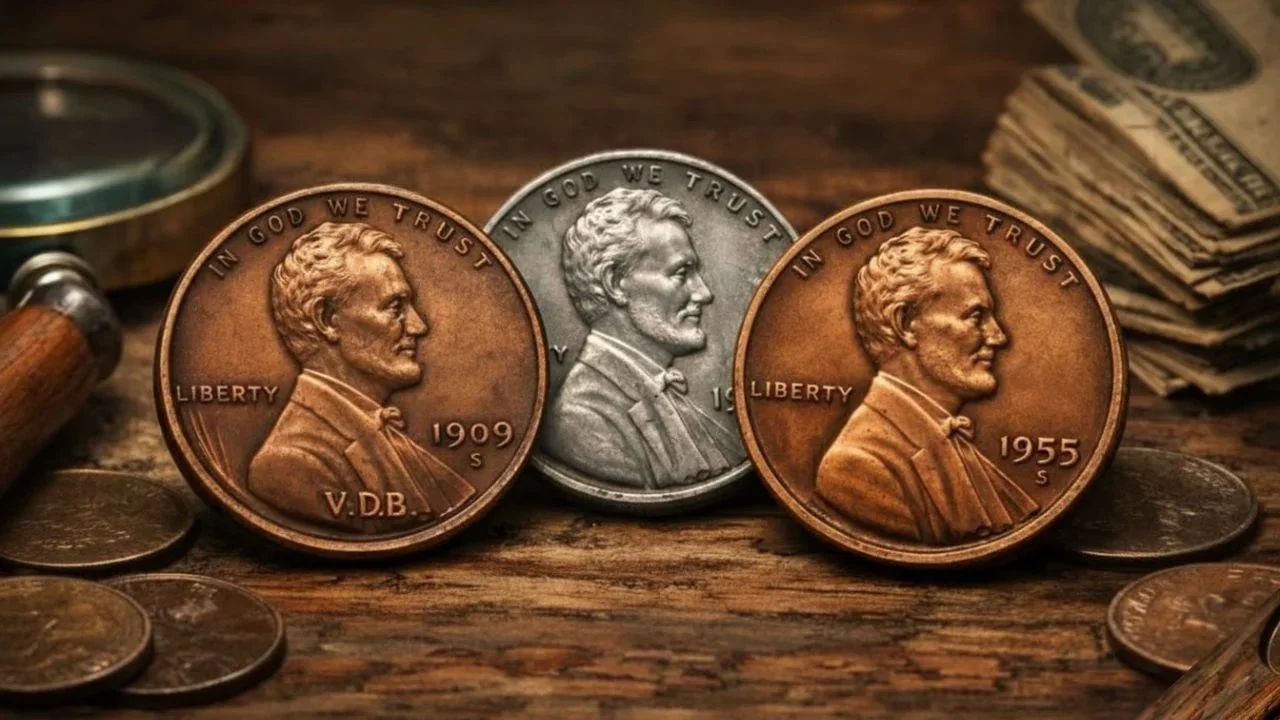
In the sophisticated world of tangible assets, few coins balance accessibility and extraordinary upside quite like the Lincoln Wheat cent. Introduced in 1909, this small copper coin made history by becoming the first regularly circulating U.S. coin to feature a real person—Abraham Lincoln.
Produced by the United States Mint from 1909 through 1958, the Wheat penny witnessed two World Wars, the Great Depression, and America’s industrial expansion. While millions remain common, a select group of rare dates and mint errors now command six- and seven-figure prices in 2026.

For collectors and investors seeking performance-driven historical assets, understanding which Wheat pennies matter—and why—has never been more important.
Why Certain Wheat Pennies Command Elite Prices
Not every old coin is valuable. In today’s competitive numismatic market, true value is driven by four pillars:
Scarcity within specific grades
Strong and sustained collector demand
Exceptional state of preservation
Documented mint errors or historical significance
Age alone does not create wealth. Instead, it is rarity combined with condition that fuels record-setting auction results.
A one-cent coin from the 1940s can represent generational capital—if it is the right variety in the right grade.
The 1943 copper cent: A Wartime Rarity
During World War II, copper was reserved for military use. In 1943, the Mint struck pennies in zinc-coated steel to conserve critical materials.
However, a handful of leftover copper planchets from 1942 were accidentally fed into presses bearing 1943 dies. The result was one of the most famous mint errors in American history.
Today, authenticated examples regularly sell between $200,000 and $500,000. Exceptional high-grade specimens have surpassed the $1 million threshold.
How to identify one:
A genuine 1943 steel cent will stick to a magnet.
A 1943 copper cent will not.
The correct copper weight is approximately 3.11 grams.
Because counterfeits and altered dates are widespread, professional authentication is essential before any transaction.
The 1909-S VDB cent: The Series Key
The 1909-S VDB remains the cornerstone of the Wheat penny series.
When the coin debuted in 1909, designer Victor David Brenner included his initials “VDB” prominently on the reverse. Public criticism led to their swift removal. Only about 484,000 coins were struck at the San Francisco Mint before production halted.
This limited mintage created instant scarcity.
High-grade Mint State Red examples have exceeded $150,000 at auction. Even heavily circulated pieces routinely trade above $700.
Collectors prize this coin for its low production numbers, historical controversy, and enduring demand within registry-set competitions.
The 1914-D Lincoln cent: A Condition Rarity
While its original mintage was not exceptionally low, the 1914-D circulated heavily. As a result, sharply preserved Mint State examples are scarce.
Values in 2026 illustrate the impact of grade:
Circulated examples typically range from $150 to $400.
Premium Mint State Red specimens can exceed $100,000.
The 1914-D is frequently counterfeited, often by adding a fraudulent “D” mint mark to a 1914 Philadelphia coin. Verification through respected grading services is strongly recommended.
The 1922 No D cent: A Die Anomaly
In 1922, all Wheat pennies were struck at the Denver Mint. Due to severely worn dies, certain coins were produced with a faint or missing mint mark.
The “No D” variety is one of the most studied die errors in the series.
Current market ranges:
Circulated examples: $500 to $1,200
Mint State pieces: $3,000 to $12,000 or more
Authentication matters. Not every weak 1922 cent qualifies—only coins matching specific die characteristics are considered genuine examples.
The 1955 Doubled Die cent: Bold and Unmistakable
Few mint errors are as visually dramatic as the 1955 Doubled Die cent.
A misalignment during the die hubbing process caused pronounced doubling on:
The date
“LIBERTY”
“IN GOD WE TRUST”
Unlike subtle mechanical doubling, this variety is immediately visible without magnification.
High-grade Red examples commonly trade between $10,000 and $15,000. Exceptional specimens have crossed into six-figure territory.
The related 1958 Doubled Die is rarer by population, though it appears less frequently at auction.
The Power of Color and Grade
Copper is highly reactive. Over time, original red luster naturally transitions to brown.
Professional grading services categorize Wheat pennies as:
Red (RD) – 95 percent or more original color
Red-Brown (RB) – Partial original luster
Brown (BN) – Fully toned
The financial difference can be extraordinary. A coin worth $20 in Brown might command $200 or more in full Red. For elite key dates, that premium can extend into tens of thousands of dollars.
Condition rarity—especially among top-population certified coins—drives much of today’s competitive bidding.
Wheat Pennies as Alternative Assets in 2026
In an era where investors seek diversification beyond equities and digital assets, rare coins offer a compelling blend of portability, historical grounding, and finite supply.
Key market drivers include:
Certified key dates
High-grade Red examples
Documented wartime errors
Registry-set competition
Digital auction platforms have increased global participation, yet elite examples remain tightly held among experienced collectors and institutions.
While common circulated Wheat pennies trade modestly, top-tier examples continue to demonstrate resilience and long-term appreciation potential.
Smart Strategies for New Collectors
For those entering the Wheat penny market:
Begin with affordable 1940s and 1950s issues to build familiarity.
Use magnification to inspect for doubling or anomalies.
Store coins in inert, non-PVC holders.
Never clean a coin—cleaning permanently reduces value.
Study grading standards before purchasing high-value pieces.
Education is capital protection.
Final Perspective
The Lincoln Wheat cent remains one of the most compelling gateways into rare U.S. coin collecting. While millions are common, a select group—such as the 1943 copper cent, 1909-S VDB, 1914-D, 1922 No D, and 1955 Doubled Die—have achieved valuations once associated with fine art and luxury assets.
In 2026, these coins represent more than nostalgia. They are precision-grade historical investments with measurable scarcity and global demand.
Before dismissing an old penny as spare change, look closer. Within America’s smallest denomination lies the potential for extraordinary value—and in rare cases, life-changing wealth.